
Database & backend coursework · 2026
Backend &
Data Systems
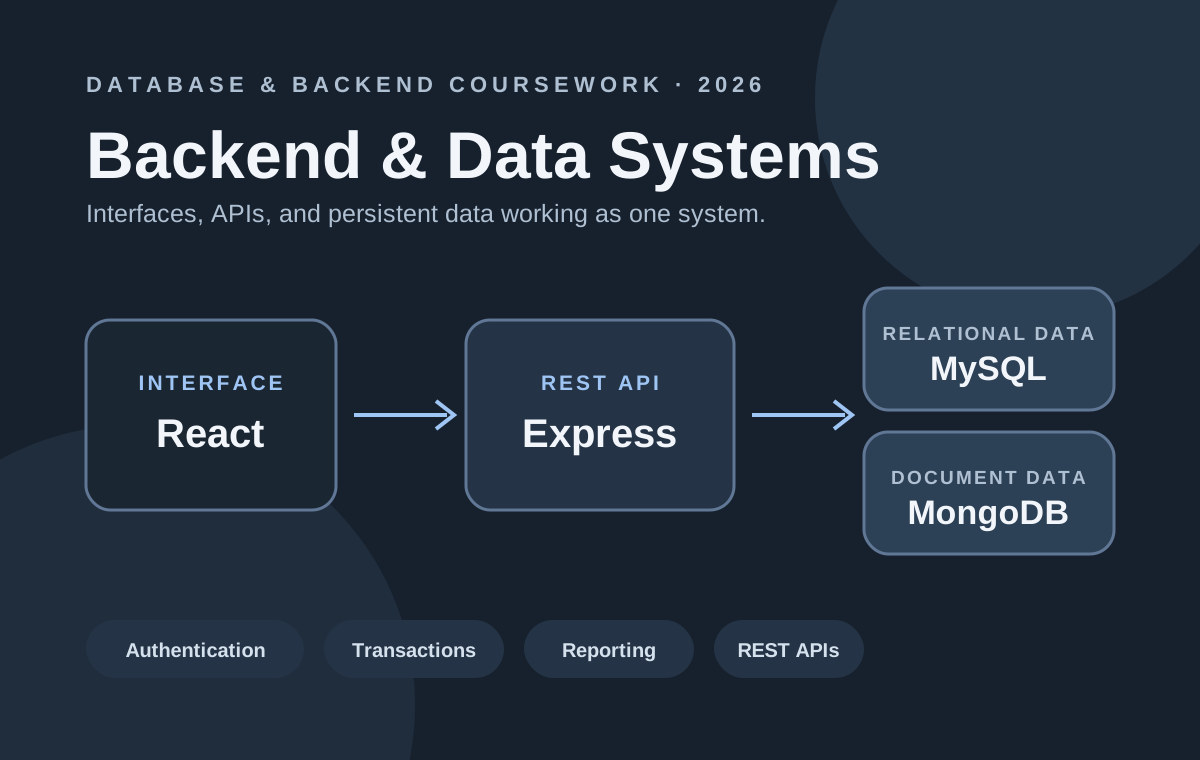
A progression from database-connected pages to authenticated, data-driven React applications.
01 · Foundation
ERA Academy
A student portal connecting a traditional HTML, CSS, and JavaScript frontend to Express routes and MySQL records.
02 · Hybrid data
ERA Helpdesk
A React helpdesk pairing structured ticket data in MySQL with flexible technician notes and activity in MongoDB.
03 · Application systems
ERA Commerce
A broader application introducing authentication, role-aware routes, transactions, inventory, orders, reviews, and reporting.
Application evidence
Two applications, two different data stories
Commerce demonstrates the broader application architecture, while Helpdesk provides the clearest example of relational and document data supporting one interface.
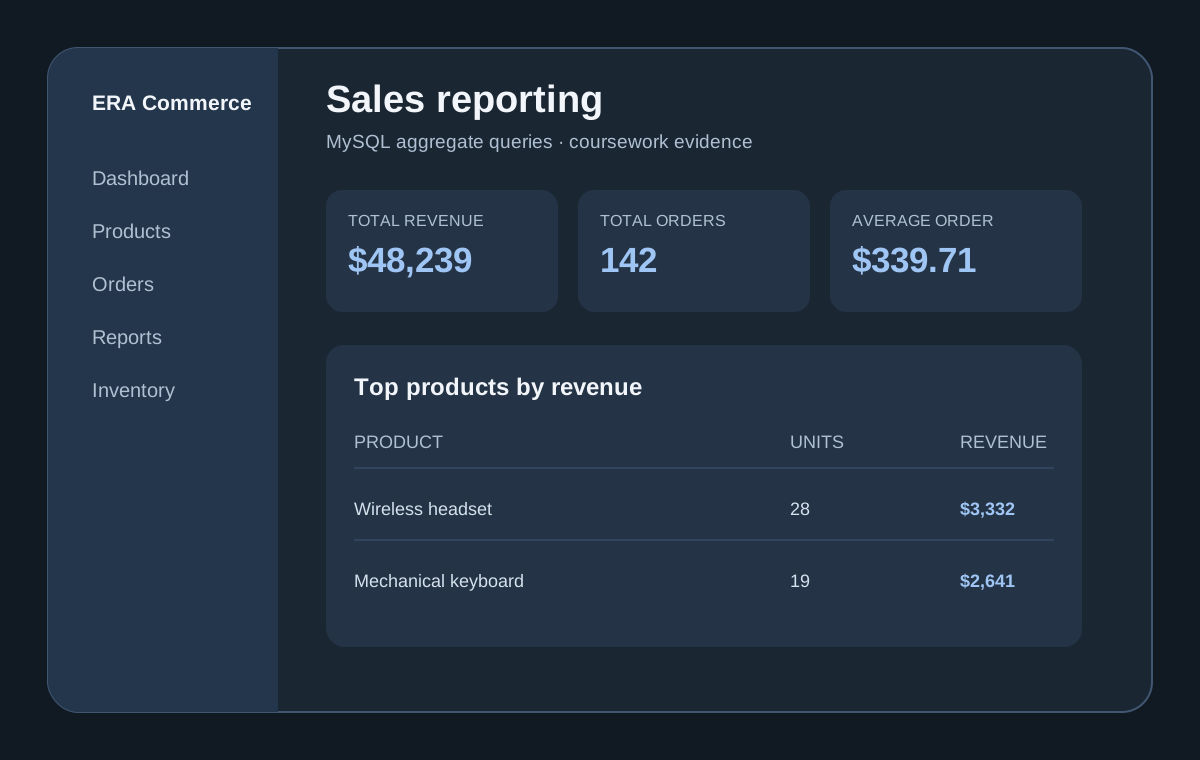
ERA Commerce · reporting
The strongest overall application
Commerce connected an authenticated React interface to Express controllers, MySQL transactions and reporting queries, and MongoDB-backed reviews.
- JWT authentication and role-aware routes
- MySQL transactions, inventory, and orders
- Aggregate reporting and MongoDB-backed reviews
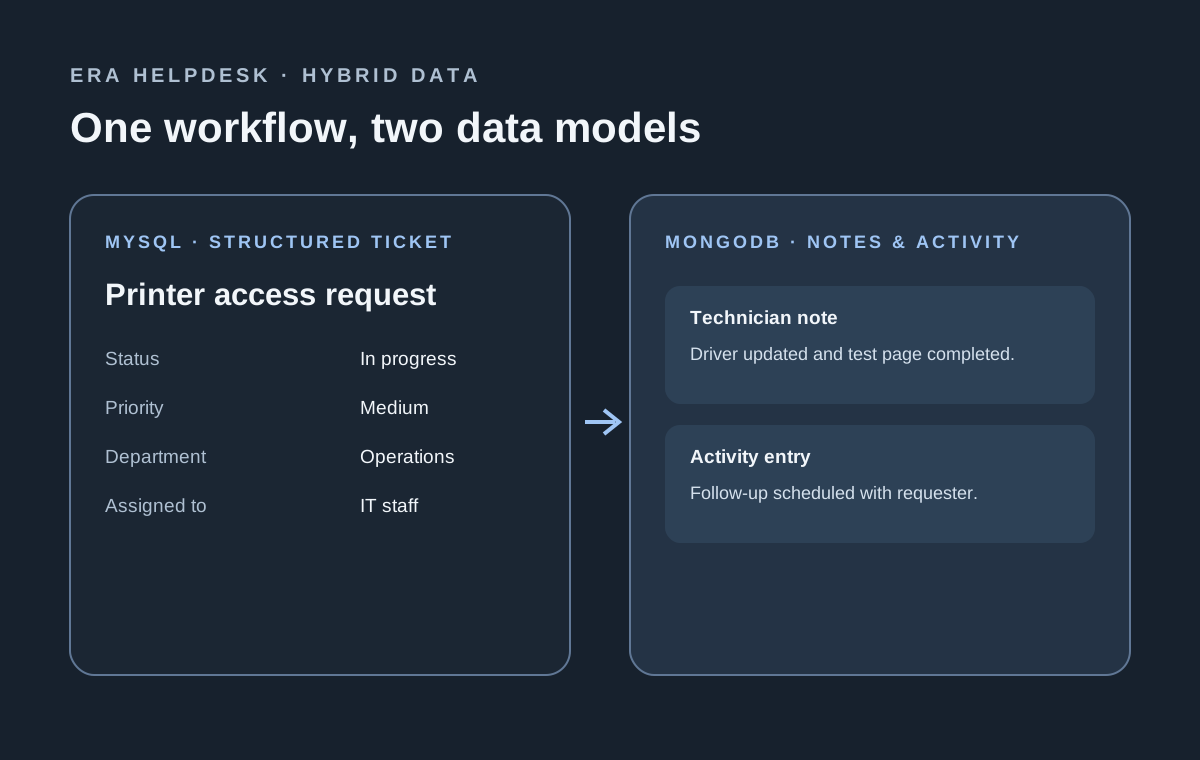
ERA Helpdesk · hybrid data
Two data models in one workflow
Structured users and tickets remained relational, while technician notes and activity history demonstrated a document-oriented use case.
- Structured users and ticket relationships in MySQL
- Technician notes and activity history in MongoDB
- One React workflow joining both data models
Foundations & reflection
Building the system clarified what production readiness requires
Relational data foundations
Structure before complexity
Additional guided practice included indexes, EXPLAIN, views, procedures, functions, triggers, and events. These are presented as coursework exposure rather than inflated as advanced mastery.
What I learned
Seeing the full application path
This work expanded my perspective from building interfaces to understanding how interfaces communicate with APIs and persistent data. Later exercises introduced bcrypt, JWT, role checks, and transactions while also making the remaining production-hardening work easier to recognize.